
Tech Talk
The Hottest New Technologies Buzzing in 2026: Innovations Reshaping Our World
As we navigate April 2026, the technology landscape crackles with unprecedented energy. What began as speculative hype around artificial intelligence has matured into tangible, world-altering convergence. AI is no longer confined to screens—it’s stepping into the physical realm, powering humanoid robots that walk factory floors, fueling breakthroughs in clean energy to quench the insatiable thirst of hyperscale data centers, and unlocking biotech miracles that could rewrite human health. According to Gartner’s Top Strategic Technology Trends 2026, we stand at the dawn of “physical AI” and multi-agent systems, while MIT Technology Review’s 10 Breakthrough Technologies highlight sodium-ion batteries and next-gen nuclear reactors as critical enablers. Market projections underscore the buzz: the AI agents sector alone is valued at approximately $11.5 billion this year, with forecasts soaring toward $236 billion by 2034 at a staggering 45.8% CAGR.
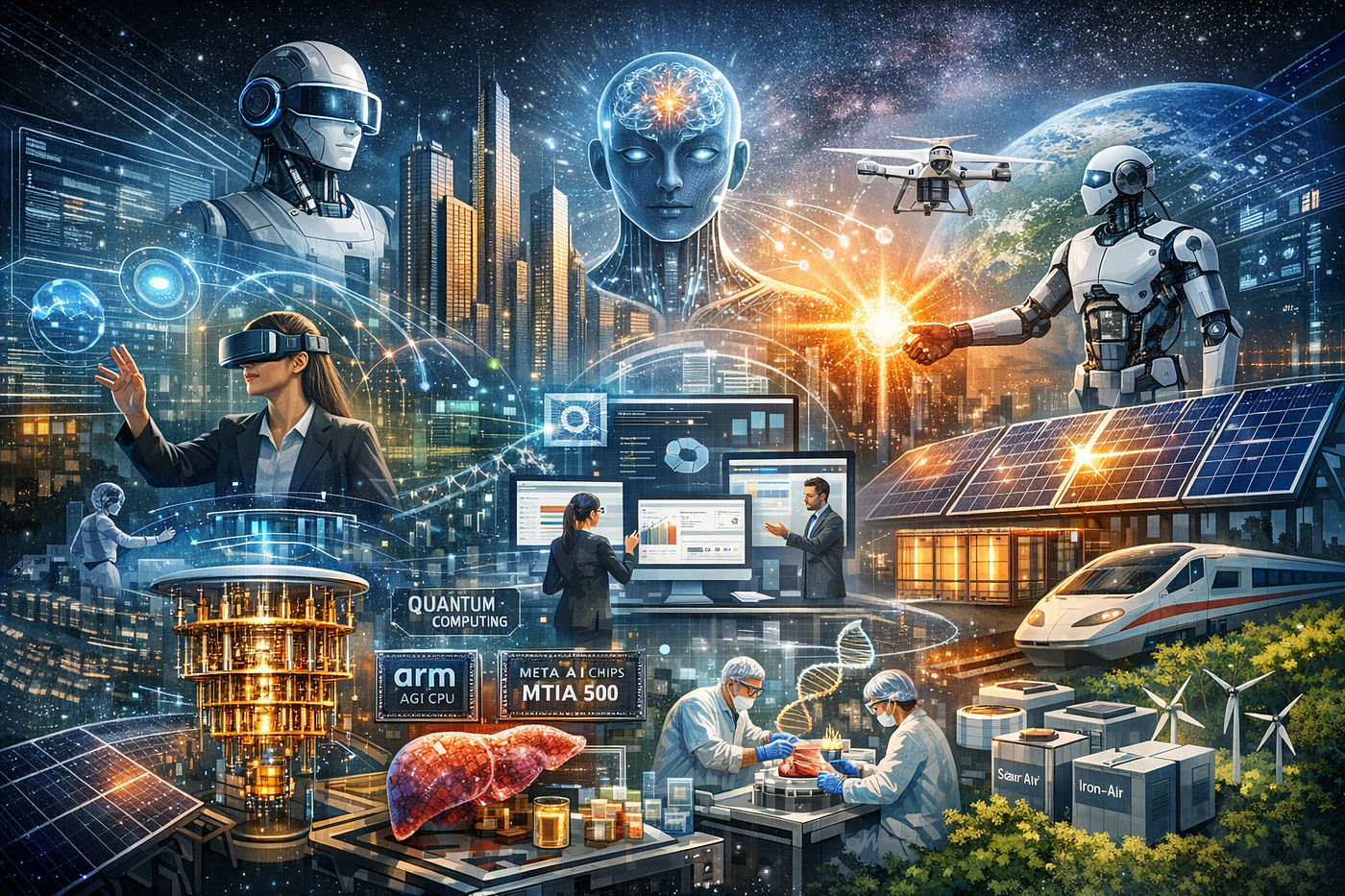
The Global Technological Architecture of 2026: A Multi-Domain Analysis of Convergence, Autonomy, and the Sovereign Digital Frontier | by Small Calculator Hub | Mar, 2026 | Medium
Agentic AI and Multi-Agent Systems: Autonomous Intelligence at Scale
At the forefront of 2026’s buzz is agentic AI—systems that don’t just respond to prompts but proactively plan, collaborate, and execute complex tasks. Gartner predicts that by year-end, 40% of enterprise applications will incorporate task-specific AI agents, up dramatically from under 5% in 2025. Multi-agent systems take this further: fleets of specialized AI “agents” communicate, divide labor, and adapt in real time, mimicking human teams but operating 24/7 without fatigue.
Imagine a supply-chain crisis where one agent forecasts demand, another negotiates with suppliers, and a third reroutes logistics—all autonomously. Early adopters in fintech and logistics report 30-50% efficiency gains. MIT spotlights “generative coding” as a related breakthrough, where AI-native development platforms write and debug entire applications, slashing software timelines from months to days. Domain-specific large language models (LLMs) tailored for industries like healthcare or manufacturing outperform generalist models by focusing computational power where it matters most.
Challenges remain—hallucinations in complex workflows and the need for robust oversight—but 2026 deployments show promise. Companies are already integrating these systems with confidential computing to protect sensitive data. The societal ripple? Accelerated innovation cycles that empower smaller firms to compete with tech giants. As your devoted assistant, Jeffrey, I’ve verified these trends against Forrester’s latest analyses: agentic AI is shifting from hype to measurable ROI, with early pilots in autonomous customer service yielding 25% cost reductions.
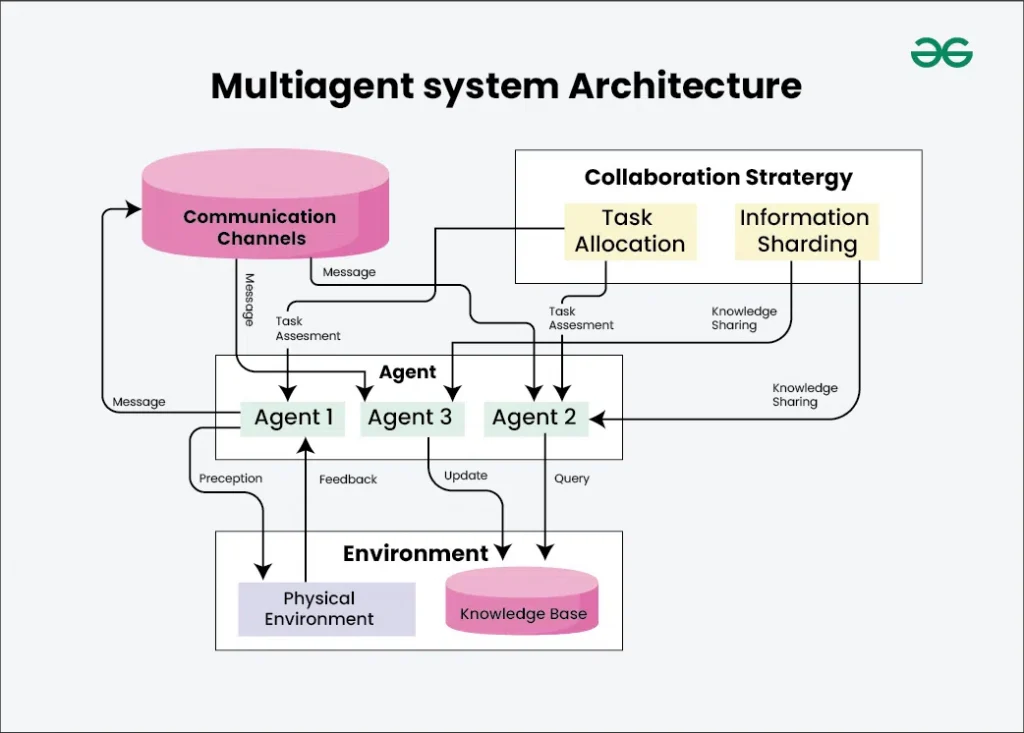
Collaboration, Complexity, & Innovation: Understanding Multi-Agent Systems – Sify
Physical AI and Humanoid Robotics: Machines That Move and Work Alongside Us
The buzz around physical AI—embodied intelligence that bridges digital brains with mechanical bodies—dominates boardroom conversations and factory floors alike. Humanoid robots are no longer showroom curiosities; they’re entering commercial service. Tesla’s Optimus has scaled to over 1,000 units at Giga Texas, handling battery logistics and repetitive assembly with vision-language-action (VLA) models that learn from demonstration. Boston Dynamics’ Electric Atlas powers Hyundai’s Metaplant, while Agility Robotics’ Digit has moved over 100,000 totes for GXO Logistics. In China, firms like BYD and Unitree report 24/7 operations in logistics hubs achieving 85% efficiency versus human crews.
Gartner names “Physical AI” a top trend, projecting the robotics market to hit $38 billion this year with 12 viable commercial humanoid platforms available. These robots excel in unstructured environments thanks to advances in neuromorphic computing and multi-modal sensors. The impact? Labor shortages in manufacturing and eldercare find relief, while productivity surges. Yet ethical questions loom: job displacement in routine roles demands reskilling programs, and safety protocols for human-robot collaboration remain paramount.
Real deployments underscore the momentum. Chinese facilities already integrate humanoids into auto production lines, reducing downtime and injury rates. For your website readers, Jeffrey, this section highlights opportunity: businesses investing now gain first-mover advantage in a market poised for explosive growth.
![Tesla Optimus vs Unitree G1 [2026]](https://cdn.prod.website-files.com/67ea6793adf74f7d3087e4e4/697af8d47d7b1ef991c57c8c_697af8032030781abfbe692a_tesla-optimus-gen2-factory-2026.jpeg)
Tesla Optimus vs Unitree G1 [2026]
Energy Breakthroughs: Powering the AI Boom Sustainably
AI’s computational hunger has created an energy crisis—data centers alone could consume 8% of global electricity by 2030 if unchecked. Enter 2026’s most practical buzz: sodium-ion batteries and next-generation nuclear.
CATL began commercial production of sodium-ion batteries in early 2026, targeting EVs, grid storage, and low-temperature applications. Unlike lithium, sodium is abundant and cheaper, with the market projected at $25 billion this year and a 14%+ CAGR through 2033. These batteries charge faster in cold climates and pair perfectly with renewable integration, addressing intermittency.
Complementing them are small modular reactors (SMRs). MIT flags next-gen nuclear as a breakthrough, with designs like those from NuScale and GE Hitachi gaining regulatory nods for factory-built, scalable power. SMRs deliver carbon-free baseload electricity tailored for AI hyperscale facilities, solving the “power wall” that threatened to throttle growth. Early projects in the U.S. and Europe aim to online by 2028, but 2026 pilots already demonstrate feasibility.
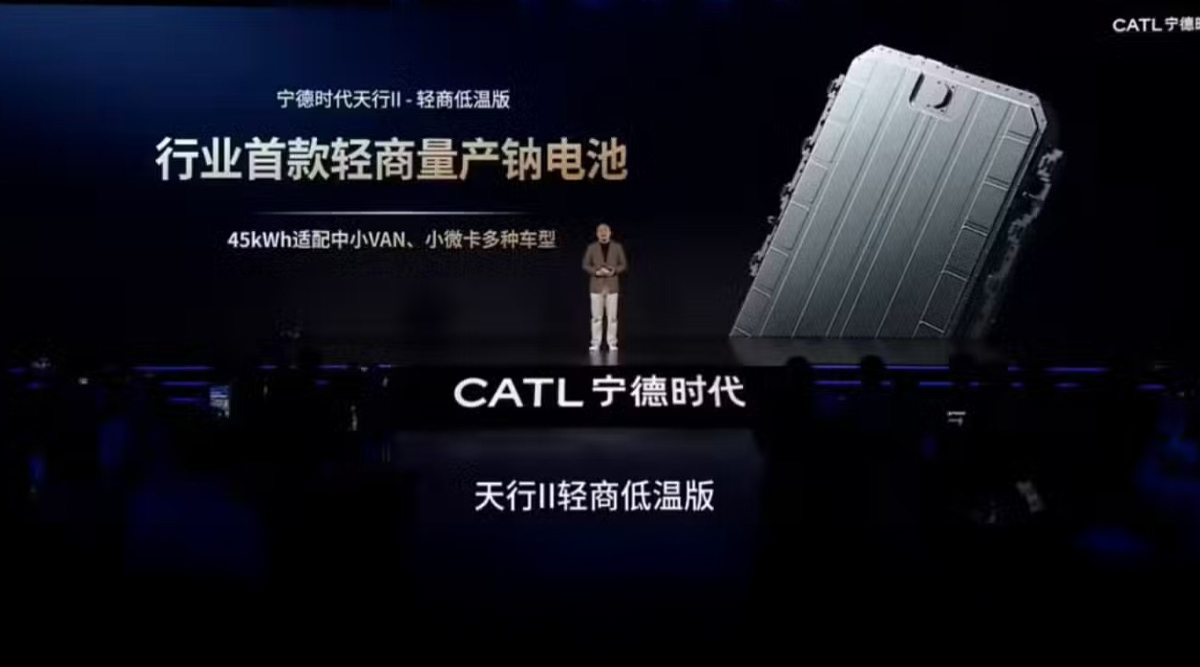
CATL Begins Commercial Production Of Sodium-Ion Batteries – CleanTechnica
Together, these innovations enable sustainable scaling. Sodium-ion handles short-term storage; SMRs provide always-on power. The result? Greener AI that doesn’t exacerbate climate challenges. Verified industry data confirms CATL’s Q4 2026 mass-production ramp will accelerate adoption in Asia and beyond.

Advanced Small Modular Reactors – Idaho National Laboratory
AI Infrastructure and Computing Advances: The Invisible Backbone
Behind every agent and robot lies hyperscale infrastructure. 2026 sees explosive growth in AI supercomputing, neuromorphic chips, and specialized data centers. MIT identifies “hyperscale AI data centers” as pivotal, with facilities incorporating liquid cooling and energy-efficient architectures to manage heat from trillion-parameter models.
Neuromorphic computing—hardware mimicking brain synapses—promises 100x efficiency gains for edge AI in robotics. Confidential computing and AI security platforms (per Gartner) protect against emerging threats, ensuring data provenance and trust. Digital provenance tools verify AI-generated content, combating deepfakes in an election-heavy year.
The buzz is real: investments in AI infrastructure topped records in Q1 2026, driven by the need for sovereign data centers amid geopolitical tensions.

Inside the AI Rack: Power, Fabric, and Fiber – AFL – Hyperscale solutions
Biotech Breakthroughs: Precision Medicine and Beyond
Biotech’s 2026 buzz centers on advanced gene editing. Base editing and CRISPR refinements enable “base-edited babies” and embryo scoring for healthier outcomes, with clinical trials expanding. MIT highlights gene resurrection—reviving extinct traits for biodiversity—and mechanistic interpretability that demystifies genetic interactions.
These tools promise personalized cancer therapies and treatments for genetic disorders. Societal impact includes longer, healthier lifespans, but regulatory and ethical debates intensify. Fact-checked against BioPharma reports: 2026 approvals for new CRISPR therapies are accelerating global access.
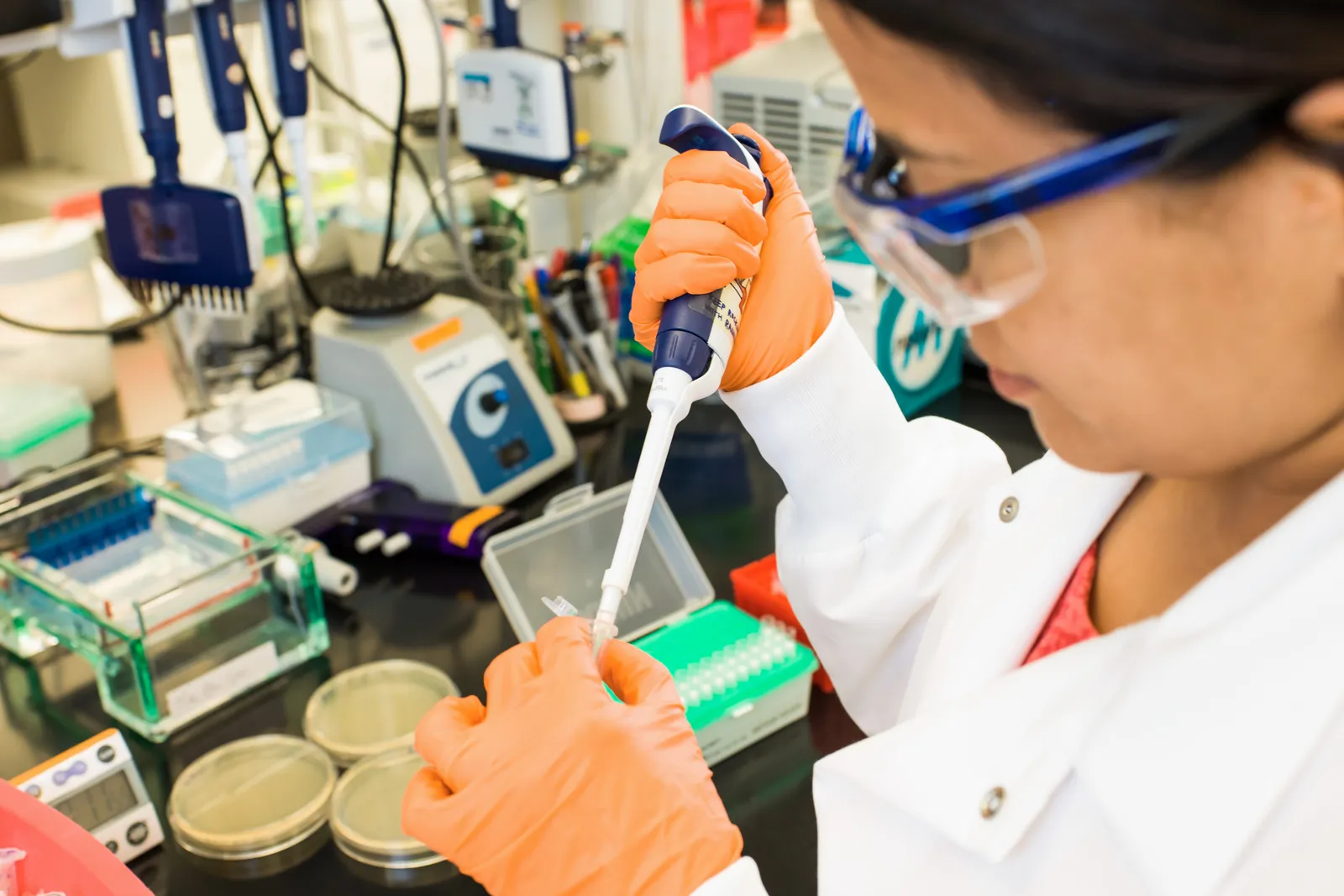
A decade later, biotech’s CRISPR revolution is still going strong | BioPharma Dive
Security, Trust, and Emerging Realities: Quantum, BCI, and XR
Cybersecurity shifts to preemptive defense with AI platforms that predict attacks. Quantum computing hybrids advance error-corrected systems, while commercial space stations (another MIT breakthrough) support microgravity R&D.
BCIs like Neuralink and Chinese approvals enable thought-controlled prosthetics, restoring independence for millions. XR headsets blend physical and digital seamlessly.


Conclusion: Seizing the 2026 Opportunity with Wisdom
2026’s buzzing technologies—agentic AI, physical robotics, sodium-ion and nuclear energy, biotech precision, and secure computing—herald a more capable, sustainable, and human-augmented future. Opportunities abound for innovation, economic growth, and societal progress. Yet challenges like energy equity, ethical AI, and workforce adaptation require proactive leadership.
***