
Pure Horizons: How Ai is Eradicating Microplastics to Protect Humanity’s Future
In the wonderful future AI is helping us build, one of the most insidious threats to human health and planetary life—microplastics—will become a relic of the past. These tiny fragments, smaller than 5 millimeters, have infiltrated our oceans, rivers, soil, food chains, and even our bloodstreams, posing risks from inflammation to hormonal disruption. Yet by 2040, AI will not merely manage this pollution; it will eliminate it at the source, in real time, and across every scale. AI will serve as the tireless guardian, the precision engineer, the predictive strategist, and the empathetic companion that turns cleanup into prevention and protection into abundance. Through conversational sidekicks, autonomous robots, intelligent filtration, and global modeling, AI will safeguard our drinking water, food, and ecosystems—restoring purity to the very foundations of life. This is the hopeful trajectory already visible in today’s breakthroughs in spectroscopy, drones, and smart sensors, scaled with human-centered design. Humanity will thrive in a cleaner, healthier world because AI handles the invisible work, freeing us to focus on connection, creativity, and care.
1. Ai as the All-Seeing Guardian: Real-Time Detection Everywhere
Imagine stepping into your kitchen. You fill a glass from the tap while wearing a discreet lapel-pin AI companion or lightweight AR glasses. “Echo,” your home guardian, speaks softly: “This water is 99.8% microplastic-free today. I detected trace polyethylene from upstream runoff and neutralized it via the smart filter. Want the full water-quality story?” Echo’s embedded sensors and AI algorithms—trained on millions of spectral signatures—analyze in real time using Raman spectroscopy and hyperspectral imaging, spotting particles as small as 1 micron without any lab equipment.
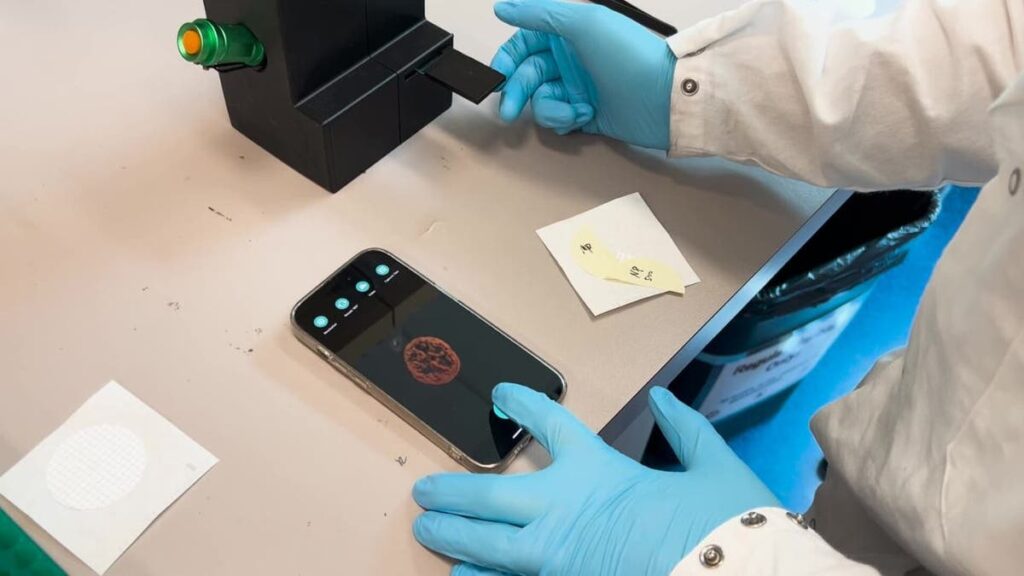

This is the everyday reality of AI-powered detection. In rivers and oceans, fleets of AI-guided drones and robotic boats patrol like vigilant sentinels. The Ocean Cleanup’s upgraded systems now use onboard AI cameras (ADIS) to scan vast areas in real time, distinguishing plastic from seaweed or jellyfish with over 95% accuracy. When a hotspot is identified, autonomous surface vessels or underwater microrobots swarm in—tiny, magnetically steered devices coated with bio-inspired adhesives that capture microplastics before they fragment further. These robots learn from each mission, optimizing paths via reinforcement learning to cover more ground with less energy.
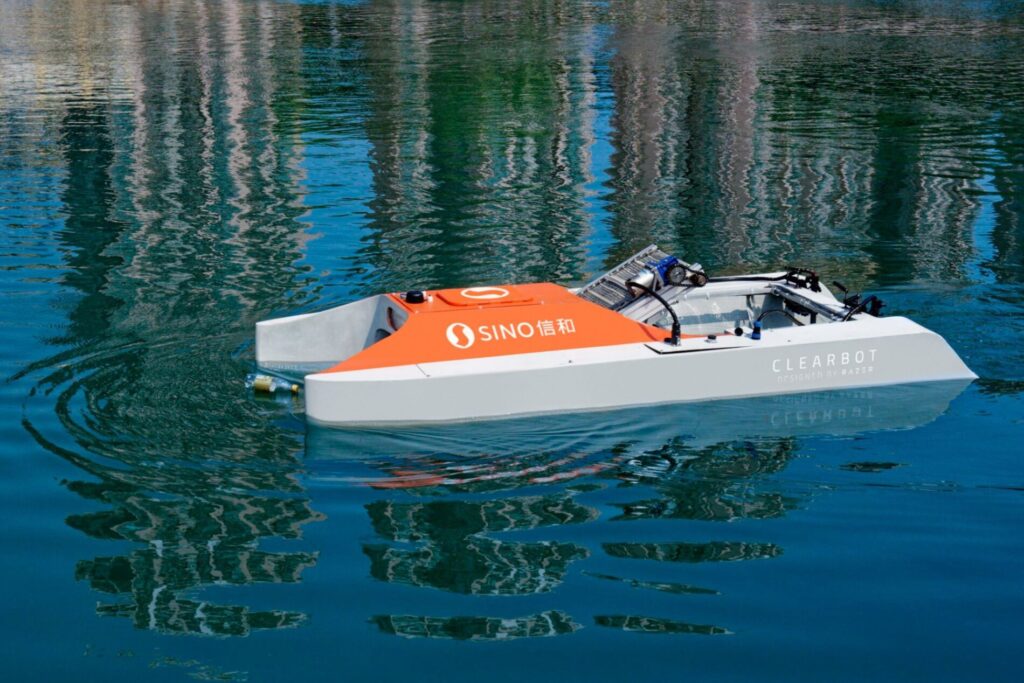
This AI-enabled robotic boat cleans up harbors and rivers to keep plastic trash out of the ocean – Source Asia
On land and in food production, AI turns monitoring into prevention. Farmers’ lapel-pin sidekicks scan irrigation water and soil, while food-processing plants employ non-destructive AI imaging: a 1D convolutional neural network analyzes Raman spectra from seafood or produce, flagging microplastics without destroying samples. Grocery stores and home kitchens gain portable scanners that integrate with apps, predicting contamination risk based on supply-chain data. No more guesswork—AI provides plain-language explanations and actionable steps, empowering everyone from smallholder farmers to families.
2. Precision Removal: From Smart Filters to Swarm Robotics
AI doesn’t just detect; it removes with surgical elegance. In wastewater treatment plants, machine-learning models like PlasticNet optimize coagulation and filtration in real time, achieving 95%+ removal rates by predicting particle behavior and adjusting chemical doses or membrane pressures instantly. At home, advanced point-of-use filters—enhanced by ferrofluid technology and AI sensors—bind and magnetically extract microplastics, recycling the fluid for near-zero waste. Your kitchen AI companion might say, “Filter cartridge at 87% efficiency. I’ve scheduled a low-cost refill and confirmed it meets WHO safety standards.”
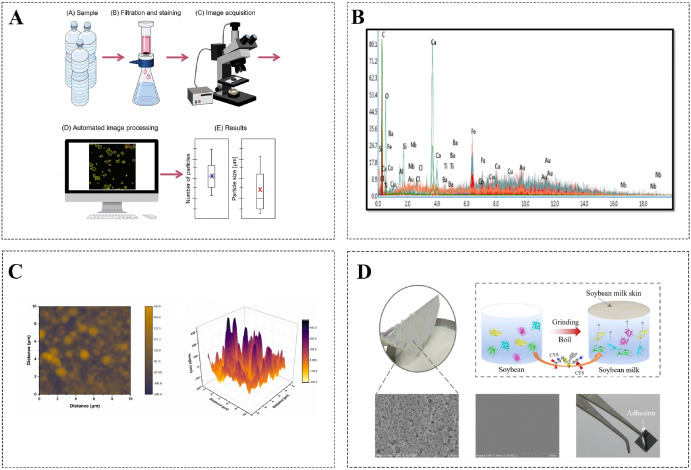
Detection of microplastics from food and beverage packaging materials – ScienceDirect
In open environments, AI orchestrates robotic swarms. Underwater drones equipped with computer vision navigate turbid rivers, using YOLO-style object detection to target microplastic clusters. On ocean surfaces, AI predicts drift patterns from currents and wind, deploying interceptor barriers exactly where needed. Even deeper, benthic robots crawl seabeds, vacuuming settled particles while AI distinguishes litter from marine life. These systems scale globally: satellite data fused with AI models creates holographic maps of pollution hotspots, guiding international cleanup fleets. What once required massive manual effort now happens autonomously, 24/7, with minimal environmental disruption.
3. Breaking the Cycle: Ai in Prevention, Food Safety, and Supply Chains
The most powerful defense is prevention, and AI excels here. In agriculture and manufacturing, AI sidekicks audit processes to eliminate plastic shedding—suggesting biodegradable alternatives or redesigning packaging via generative models. Smart packaging embedded with AI sensors monitors for leaching microplastics in real time, alerting suppliers before products reach shelves. In the food chain, non-invasive AI tools scan fish or crops for contamination, enabling rapid recalls or source tracing via blockchain-linked models.
Policy and industry benefit too. AI policy simulators run thousands of scenarios—taxing single-use plastics, investing in recycling infrastructure, or capping production—predicting reductions in microplastic pollution through 2050 with remarkable precision. Regulators receive clear visualizations: “This intervention would cut ocean inflow by 42% in your region.” Companies use the same tools to redesign products, accelerating the shift to circular economies. AI even engineers solutions at the molecular level: machine learning designs enzymes that break down plastics faster or biodegradable polymers that never fragment.
4. Everyday Protection: Ai Companions for Personal and Community Health
Back home, AI becomes a trusted family protector. Your lapel pin or AR headset scans meals, water, and even air, offering gentle guidance: “This salad has negligible microplastics—here’s why the dressing choice helped. For dinner, I recommend the local farm’s produce; their soil remediation program is AI-verified.” In schools and communities, AI tutors teach children about the issue through interactive simulations: “Watch how a single plastic bag breaks into millions of particles—now see our robotic swarm capture them in seconds.” Public drinking fountains and community wells feature AI-monitored filters that self-report and self-heal, ensuring equity in clean water access.
For vulnerable populations—coastal communities, urban food deserts—AI democratizes protection. Mobile apps in any language provide real-time alerts and low-cost remediation kits. Wearable sensors track personal exposure, feeding data into global models that refine predictions and interventions. Health outcomes improve dramatically: reduced inflammation, better reproductive health, and longer lifespans as microplastic burdens plummet.
5. Global Symbiosis and Ethical Foundations: Ai Serving Humanity and Planet
None of this wonder occurs without deliberate ethics. In the flourishing future, AI systems for microplastics are transparent: every detection or removal decision includes plain-language reasoning. Data remains private and owned by communities—processed locally whenever possible. Equity is baked in: open-source models and subsidized devices ensure remote villages and low-income areas benefit equally. Bias audits guarantee models perform across diverse water chemistries and polymer types. AI even simulates long-term societal impacts, flagging any unintended consequences before deployment.
Indigenous knowledge integrates seamlessly—AI respects data sovereignty and credits traditional ecological wisdom in predictive models. Global collaboration thrives: AI mediators help nations share cleanup technologies without conflict. The result is trust: technology that amplifies human values rather than overriding them.
Conclusion: A Crystal-Clear Legacy
By 2040, we will look back on the microplastics era with the same relief we feel today about leaded gasoline—with gratitude for the AI-driven turning point. Our oceans will teem with life unburdened by plastic particles. Rivers will run pure. Food and water will nourish without hidden threats. Farms, factories, and homes will operate in harmony with nature. The lapel-pin guardian that watches your glass, the drone swarm that cleans a river, the policy model that prevents tomorrow’s pollution, the robotic filter that protects a coral reef—all are invitations to a healthier, more resilient humanity.
This future is invitational, not inevitable. AI provides the tools—detection, removal, prediction, prevention. We provide the vision, ethics, and collective will. Together, we will clear the horizons, one filtered drop, one captured particle, one informed choice at a time. The technology is advancing rapidly. Our shared humanity will ensure it serves the purest possible outcome: a world where every sip, every bite, and every breath reminds us that AI is helping us protect what matters most.