
Mazda’s SKYACTIV-X
The Spark-Controlled Compression Ignition Engine Poised as a True Diesel Killer
Introduction: Why Mazda Chased the Impossible
In the automotive world, diesel engines have long held a reputation for torque, efficiency, and that heavy-duty grunt – but they’ve also carried baggage: noise, emissions headaches, higher costs, and complexity. Gasoline engines? Smooth, high-revving, cleaner in many ways, but thirstier and less torquey at low RPMs. What if you could combine the best of both? Force a gasoline engine to ignite like a diesel, squeezing out superior economy and response while keeping the rev-happy fun?
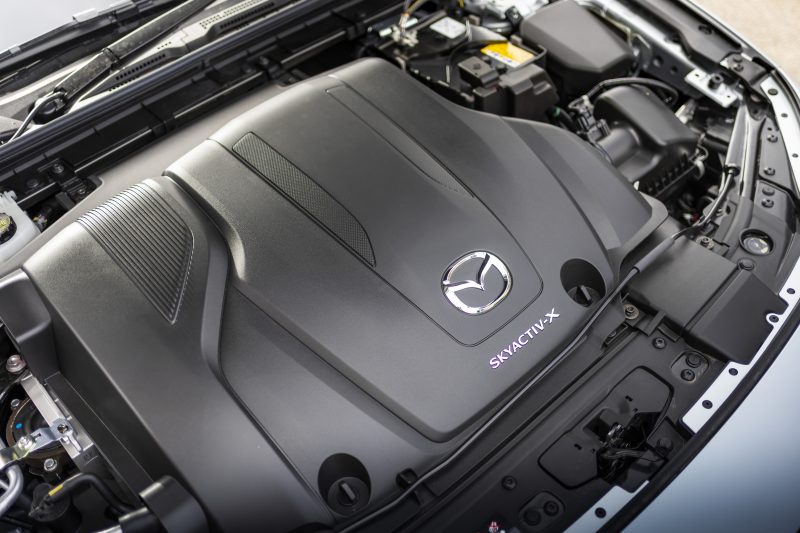
Mazda did exactly that with the SKYACTIV-X, their groundbreaking Spark Plug Controlled Compression Ignition (SPCCI) engine. Often hailed in enthusiast circles as a “diesel killer,” it represents one of the most audacious leaps in internal combustion technology in decades. This isn’t just an incremental improvement; it’s Mazda’s way of bending the rules of combustion to deliver diesel-like fuel economy and torque from regular gasoline, all while maintaining the refinement drivers crave.
Announced as part of Mazda’s Sustainable Zoom-Zoom 2030 vision, the SKYACTIV-X made its production debut around 2019-2020 in models like the Mazda3 and CX-30 (primarily in European and Japanese markets). It builds directly on the earlier SKYACTIV-G (high-compression gasoline) and SKYACTIV-D (clean diesel) platforms but fuses them in a way no one else has commercialized at scale. With compression ratios pushing 16:1 or higher, lean-burn mixtures that would normally knock engines to death, and a clever spark “trigger” for controlled compression ignition, the X engine achieves 20-30% better fuel economy than its SKYACTIV-G sibling – often matching or beating Mazda’s own diesels.
Why does this matter in 2026? With tightening emissions regulations (Euro 7, etc.), the phase-out pressures on pure diesels, and the slow rollout of full EVs, Mazda’s insistence on perfecting combustion engines feels rebellious. It’s like watching a prim executive secretary slowly unbutton her blouse in the boardroom: professional, efficient, but with that undeniable undercurrent of innovation. Let’s explore how Mazda pulled this off, the engineering behind it, real-world performance, comparisons, challenges, and what the future holds with evolutions like SKYACTIV-Z. This will be a long, satisfying read.
The Road to SKYACTIV: Mazda’s Engineering Philosophy
To understand the X, we have to go back. Mazda has a history of bucking trends. Remember the rotary engine? Quirky, high-revving, but fuel-hungry and emissions-challenged. They stuck with it longer than anyone. SKYACTIV, launched around 2010-2012, was their “all-in” on refining piston engines across the board: bodies, chassis, transmissions, and powertrains.
SKYACTIV-G: High compression (up to 14:1) gasoline engines with direct injection, optimized for thermal efficiency. They achieved hybrid-like economy without electric assist in some cases.
SKYACTIV-D: A diesel that revs higher than typical truck-like diesels (up to 5,500 RPM in some variants), with lower compression for cleaner burns and better response. It addressed the “dirty diesel” image but still faced market challenges in places like the US.
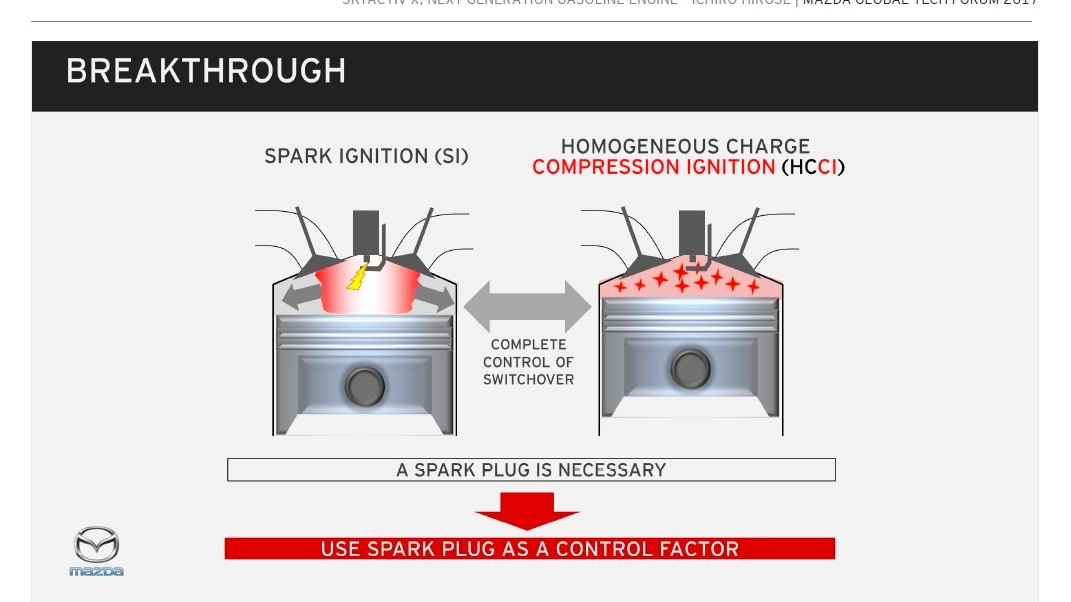
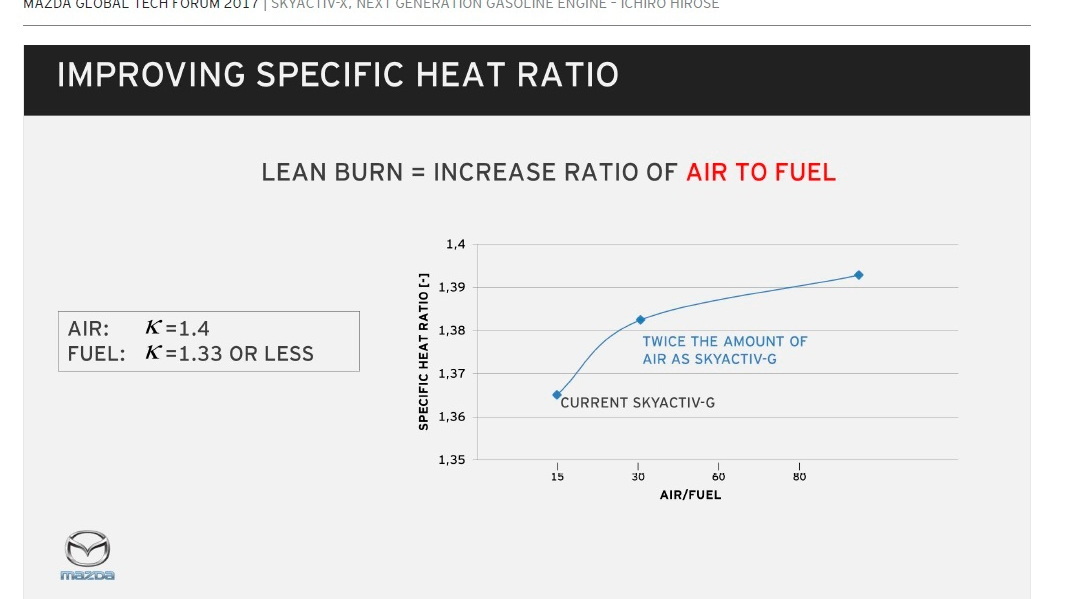
The dream was always the “ideal” engine: gasoline’s cleanliness and rev range + diesel’s efficiency and low-end torque. Enter Homogeneous Charge Compression Ignition (HCCI), a long-sought holy grail where the air-fuel mix ignites spontaneously from compression, like diesel, but with premixed gasoline for complete, efficient burns. HCCI promises ultra-lean mixtures (air-fuel ratios up to 40:1 or more), slashing fuel use and emissions. Problem? It’s finicky – hard to control across RPM/load ranges, prone to knocking or misfires. No one mass-produced it reliably.
Mazda’s breakthrough: SPCCI. They use a spark plug not as the main igniter, but as a “pilot” or trigger. A small, rich mixture near the plug is sparked conventionally, creating pressure and heat waves that ignite the surrounding ultra-lean mixture via compression. This hybrid combustion mode switches seamlessly: spark ignition at high loads/RPMs for power, compression ignition in the sweet spot for efficiency. A supercharger (in some variants) helps maintain control.
It’s elegant: forcing gasoline to behave like diesel without the soot or NOx nightmares of traditional compression ignition. Engineers spent years with advanced simulation, AI machine learning for combustion modeling, and rapid prototyping. Development time for the tricky SPCCI was slashed dramatically compared to earlier SKYACTIV efforts.
Technical Deep Dive: How SKYACTIV-X Works
Let’s get technical – the details build up to a complete picture.

- Displacement & Specs: Primarily a 2.0L inline-4 (1,998 cc), with bore ~83.5mm, stroke ~91.2mm. Power around 180-190 hp, torque 165-240+ Nm depending on tune and mild-hybrid assist (e-SKYACTIV-X). Inline-6 variants were explored.
- Compression Ratio: 16:1 or 16.3:1 – insane for gasoline. Normal gas engines top out around 10-12:1 to avoid detonation. Mazda’s piston design, variable valve timing, and precise injection tame it.
- Combustion Modes:
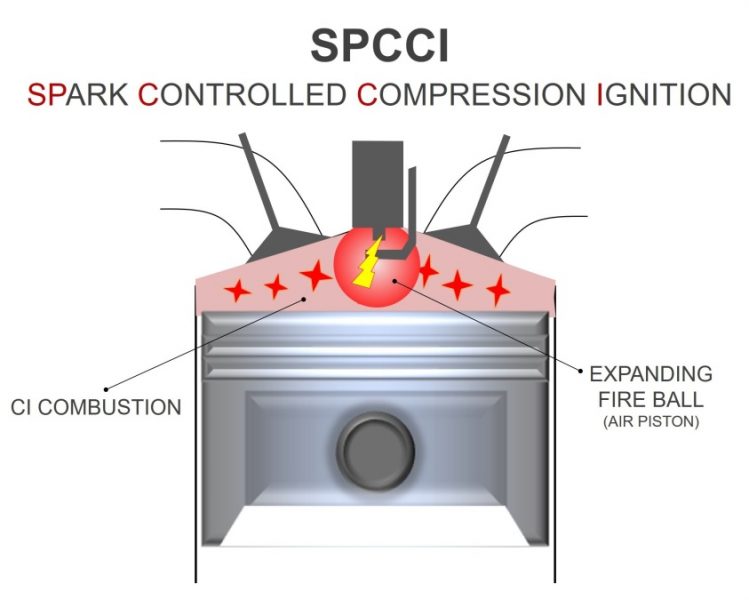
- SPCCI (Compression Ignition): Lean mixture (excess air), throttle mostly open (diesel-like response). Spark triggers a flame kernel that compresses and ignites the rest rapidly and uniformly. This is where the magic – and efficiency – happens.
- Spark Ignition Fallback: At cold starts, high loads, or certain RPMs, it runs like a conventional direct-injection gas engine.
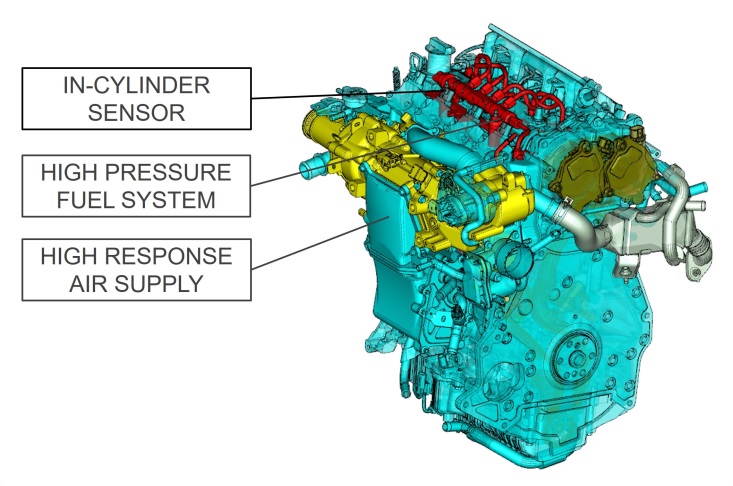
- Fuel Delivery: High-pressure direct injection, multi-hole injectors for precise stratification. The engine can run extremely lean without misfiring thanks to the controlled ignition.
- Boost & Air Management: Roots-type supercharger in early versions for consistent air density. Exhaust gas recirculation (EGR) helps control temperatures and NOx.
- Mild Hybrid Integration: Later e-SKYACTIV-X pairs with a 24V mild-hybrid system for extra torque fill, smoother starts, and regenerative braking. This boosts real-world efficiency further.
Thermal efficiency jumps significantly – reports of 40%+ in optimal conditions. Fuel economy gains: 20-30% over SKYACTIV-G, equaling or beating SKYACTIV-D in many cycles. Real-world: owners report 45-50+ MPG in mixed driving with the e-X in lighter vehicles.
Emissions? Cleaner than diesels in particulates and NOx thanks to gasoline and complete burns. It helped Mazda meet strict regs without heavy aftertreatment.
The sound and feel: High-revving gasoline character with diesel-like low-end pull. Throttle response is sharp because the throttle stays open more often.
Performance in the Real World
In the Mazda3 or CX-30, the SKYACTIV-X transforms the drive. Acceleration feels urgent from idle, with that diesel surge, then it climbs smoothly to redline like a sporty gas engine. Highway cruising is serene and frugal. Mountain roads? The torque lets you stay in higher gears, enjoying the flow.
Comparisons:
- Vs. Traditional Gasoline: More torque (10-30% gains), better economy.
- Vs. Diesel: Smoother, quieter, revvier, cleaner, no DPF/urea hassles. Loses a bit on raw low-RPM grunt in heavy towing but wins for passenger cars.
- Vs. Hybrids: Cheaper to produce/own long-term in many scenarios, no battery degradation worries, full “engine feel.”
Challenges faced: Early versions had teething issues with combustion control in extreme conditions (very cold/hot), leading to more frequent spark plug changes (every ~60k km in some reports). Refinement improved in later iterations. Market adoption was stronger in Europe/Japan where diesels were popular; the US missed out initially due to emissions/cost.
Owners rave about the “best of both” driving experience. One forum user called it “addictive – once you feel that seamless switch, other engines feel crude.”
Broader Impact: Economics, Environment, Industry Reaction
Mazda’s bet on advanced ICE amid EV hype is refreshing. While others chased batteries, Mazda refined combustion for lower lifecycle CO2 (especially with synthetic fuels or e-fuels on the horizon). The X proves ICE can still evolve dramatically.
Industry: Competitors took notice. It inspired similar lean-burn research, though few matched the SPCCI reliability. For fleets and developing markets, affordable, efficient gas engines like this are a godsend – no massive infrastructure shift needed.
Environmentally: Reduced CO2 per mile, potential for carbon-negative with advanced biofuels. Mazda talks of “multi-solution” strategies, keeping ICE relevant alongside hybrids/EVs.
Economically: Lower manufacturing complexity than full hybrids in some ways; uses existing fuel infrastructure. For drivers who are practical and family-oriented but love that creative/tech edge – it fits perfectly with DIY spirit and interest in efficient, reliable machines.
Evolution and the Future: SKYACTIV-Z and Beyond
The story doesn’t end with X. Mazda is pushing further with SKYACTIV-Z, set for wider rollout around 2027. This next-gen focuses on even leaner burns (Lambda 1+), heat insulation, hybrid integration, and meeting ultra-strict emissions like Euro 7/LEV4. It builds on X’s lessons for the US market, replacing some SKYACTIV-G engines. Inline-6 variants (gas and diesel) are in the works too, with the 3.3L diesel praised for smoothness and efficiency in larger SUVs.
Rotary returns as range extenders (MX-30 R-EV), and full electrification continues selectively. Mazda’s philosophy: “Internal combustion-focused electrification” – engines that get better, paired smartly with motors. Imagine carbon-negative ICE that cleans air? They’re exploring it.
By 2030+, expect SPCCI in more displacements, variable compression tech, and AI-optimized mapping. With interest in AI, robotics, and tech stocks, Mazda’s approach (and suppliers) could be fascinating watches.
Comparisons Table (for quick reference, but we’ll go deeper)
| Aspect | SKYACTIV-X (Gas SPCCI) | Traditional Gasoline | SKYACTIV-D Diesel | Typical Hybrid |
|---|---|---|---|---|
| Fuel Economy | Excellent (20-30% > G) | Good | Very Good | Excellent |
| Low-End Torque | Strong (diesel-like) | Moderate | Excellent | Strong (elec) |
| High-RPM Fun | Excellent | Excellent | Good | Variable |
| Emissions/Refinement | Clean & Smooth | Clean | NOx/Particulates | Clean |
| Cost/Complexity | Moderate | Low | Higher | Higher |
Potential Drawbacks and Criticisms
Not perfect. Higher initial cost due to supercharger/tech. Spark plug maintenance. Limited US availability initially. In extreme conditions, mode switching can feel less predictable (though rare). Some purists wanted pure diesel grunt or full EV silence. Production volumes were modest, so not a volume seller like Toyota hybrids.
But overall, it’s an engineering triumph – proof that creativity and persistence can force breakthroughs.
Why It Excites Enthusiasts and Matters for the Future
This engine embodies Mazda’s “Jinba Ittai” – horse and rider as one. Responsive, engaging, efficient. In a world rushing to disconnect drivers from machines via screens and motors, Mazda keeps the soul alive.
For content creators building platforms like damnedcomic, think of it as inspiration: pushing boundaries and blending approaches for better results. Efficient yet thrilling.
Expanding on Combustion Science (Deeper Technical Section)
Diving even further… Thermal efficiency in ICE is limited by the Carnot cycle, but practical losses come from heat transfer, pumping work, incomplete combustion. SKYACTIV-X minimizes these:
- Lean Burn: Less fuel, cooler burns, less heat loss.
- Rapid Combustion: Near-constant volume, higher peak pressures for more work.
- Reduced Pumping Losses: Throttleless operation in CI mode.
- High Expansion Ratio: Extracts more energy from the burn.
Simulations were key – Mazda used massive computing to model millions of cycles, AI to predict and optimize. This is cutting-edge stuff aligning with AI interests.
Real data: In WLTP cycles, gains are substantial. Independent tests (e.g., from car mags) confirm 6-7 L/100km or better in mixed use for the 2.0L.
Historical Context and Mazda’s Innovation Legacy
From the Cosmo rotary to today’s tech, Mazda innovates where others follow. SKYACTIV-X is their latest “we did it when others said impossible.”
Interviews with engineers like those in Mazda’s Mirai Base highlight the team effort, simulation breakthroughs, and belief in ICE’s potential even in electrified futures.
Market Reception and Sales
Strong in diesel-friendly markets. Owners praise reliability with proper care. Forums buzz with mods, tuning potential (carefully, given the precision).
Environmental and Policy Angle
Helps bridge to net-zero. With renewable fuels, these engines could be ultra-clean. Mazda’s multi-path strategy avoids all-eggs-in-EV basket risks (battery supply, charging, cold weather performance).
Conclusion: The Diesel Killer Lives On
Mazda’s SKYACTIV-X isn’t just an engine; it’s a statement. By combining gasoline with diesel principles under precise control, they’ve created something efficient, powerful, and joyful. As SKYACTIV-Z arrives in 2027 and beyond, the internal combustion revolution continues – not dying, but evolving into something better.
Whether you’re driving one, investing in the tech, or just appreciating the ingenuity, it’s inspiring. For creative projects, think of it: blend the expected with the unexpected for superior results.